From local action to regional impact: Tackling ocean-bound plastic together
Plastic pollution does not stop at national borders. Rivers and waterways connect communities across the South Baltic region, carrying litter from inland areas to the sea. Addressing this challenge requires more than local action alone. It requires collaboration, knowledge sharing, and a common commitment to finding solutions.
Over the past three years, the Circular Ocean-bound Plastic (COP) project has brought together partners from across the South Baltic region to better understand and address ocean-bound plastic before it reaches the Baltic Sea. Through pilot actions in Aarhus, Rostock, and Gdańsk, the project has tested innovative collection methods, explored recycling opportunities, and generated valuable knowledge that can be applied far beyond the individual pilot locations.
The project has demonstrated that while plastic pollution is a shared challenge, local conditions vary significantly. Different waterways, waste streams, and stakeholder landscapes require different approaches. By testing solutions in multiple locations and sharing experiences across borders, COP has helped identify what works, what can be improved, and how successful approaches can be adapted to other regions.
As explained by our project partner, Mirco Haseler from Leibniz Institute for Baltic Sea Research:
“It is not just about collecting the litter. It is about the sources, finding out how can we collect it in the best way? How can we monitor it? What can we do with the collected litter? And also how can we actually avoid litter entering into the sea?”
This holistic perspective has guided the project throughout its implementation. Beyond collecting more than 37,000 pieces of litter from rivers, COP has focused on understanding the entire value chain – from prevention and monitoring to collection, cleaning, recycling, and business opportunities.
Together, project partners have delivered eight reports covering plastic waste streams, collection methods, cleaning technologies, recycling options, and market opportunities. Six pilot actions have been tested across the three pilot cities, while workshops, webinars, matchmaking events, and conferences have engaged more than 20 stakeholder organisations from across the region.
A key ambition of COP has been to view collected plastic not simply as waste, but as a potential resource. By investigating the recycling properties of river-collected plastic and collaborating with innovative solution providers, the project has explored how ocean-bound plastic can be transformed into valuable new products, supporting the transition towards a more circular economy.
Perhaps the project’s most important achievement, however, is the network and knowledge built through collaboration. By bringing together public authorities, researchers, businesses, environmental organisations, and policy stakeholders, COP has strengthened regional cooperation and created a foundation for future action against plastic pollution in the Baltic Sea.
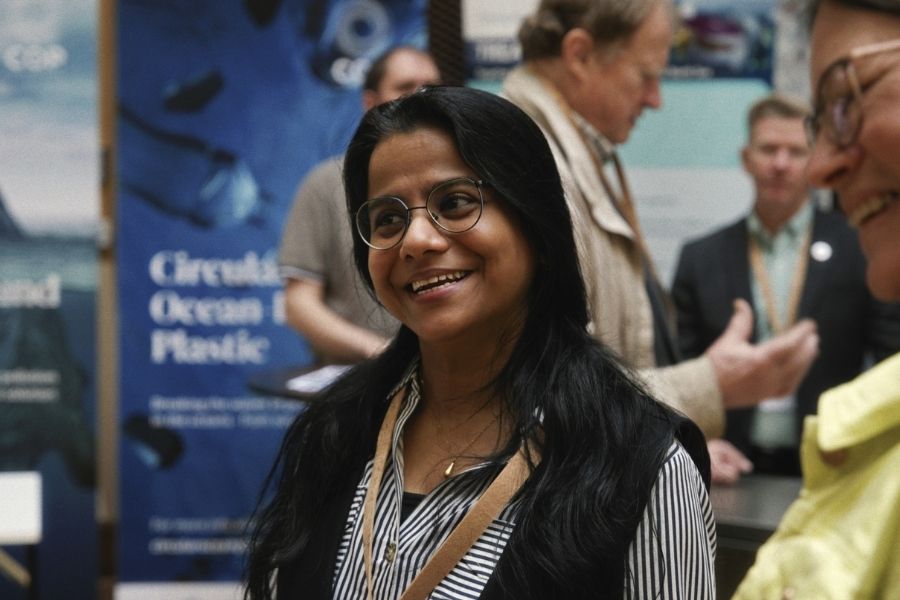
Watch the video above to hear directly from project partners, stakeholders, and experts as they reflect on the lessons learned, the value of cross-border cooperation, and the opportunities ahead for reducing ocean-bound plastic in the South Baltic region and beyond.